


Ideal for analyzing fatty acid methyl esters (FAME) in biodiesel and determining fuel purity


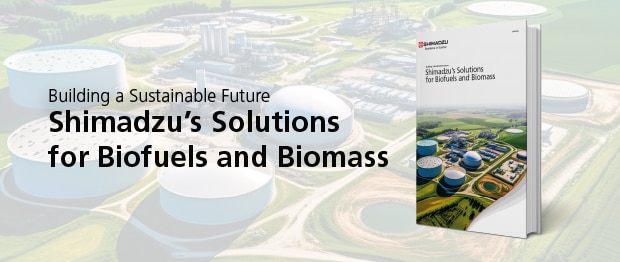
As global concern over climate change intensifies, mitigating CO2 emissions has become an urgent priority. Achieving a carbon-neutral society requires a concerted shift toward clean, sustainable energy. Among the most viable alternatives, biomass and plant- or algae-derived biofuels have emerged as critical pathways to reducing global emissions.
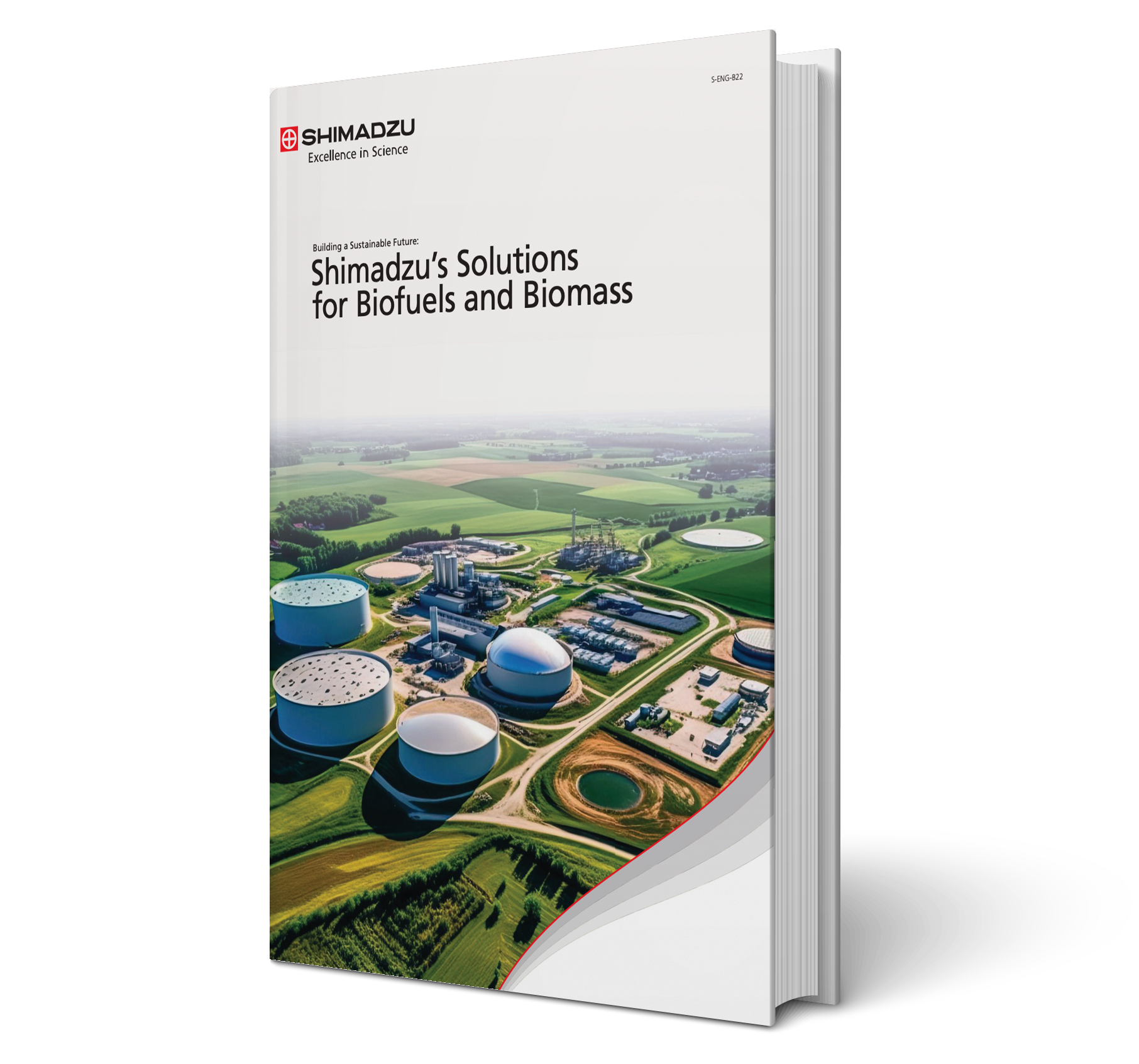
At Shimadzu, we are deeply committed to Green Transformation (GX). Grounded in our core philosophy to "Contribute to Society through Science and Technology," we actively support the global transition toward environmental sustainability. This eBook highlights Shimadzu’s advanced analytical solutions for the GX market, with a specialized focus on biomass and biofuel characterization. Download the Shimadzu Biomass & Biofuels Analytical Solutions eBook now to explore how we are advancing new energy.
Biofuels are broadly categorized into three primary forms based on their physical state and application:
Primarily utilized as sustainable transportation fuels (e.g., biodiesel, bioethanol)
Principally used for clean electricity and heat production
Used for direct combustion and thermal energy production across various applications
To balance energy needs with environmental and ethical considerations, the raw materials used to make biofuels have changed over time:
Ensuring the quality, efficiency, and regulatory compliance of biofuels requires rigorous laboratory testing. Shimadzu provides industry-leading analytical instruments for precise biofuel testing, including:
Ideal for analyzing fatty acid methyl esters (FAME) in biodiesel and determining fuel purity

Used for monitoring sugar profiles and fermentation byproducts

Provides detailed molecular identification of complex hydrocarbon blends and impurities

Enables rapid, non-destructive screening of functional groups and fuel blends

Delivers fast sulfur and trace element analysis in compliance with international fuel standards

Measures ultra-trace metal contaminants to protect engine performance and catalyst life
Biomass is the versatile, renewable hydrocarbon resource that serves as the raw material for these alternative energy streams. Derived from organic matter, common feedstocks include wood waste, municipal food waste, and cultivable microalgae.
Among renewable feedstocks, algal biomass is gaining rapid traction as a sustainable alternative to fossil petroleum.
Key advantages include:
Algae can be cultivated in non-arable environments (such as wastewater or marine settings), completely bypassing food security conflicts.
The oil production yield per unit area for algae is significantly higher than traditional terrestrial energy crops like corn or sugarcane.
Optimizing biomass conversion processes—from raw feedstock to refined bio-crude—demands robust analytical workflows. Shimadzu’s portfolio includes:
Equip your laboratory with the precision required for next-generation renewable energy research. Shimadzu’s comprehensive analytical testing suites ensure your biomass processing and biofuel products meet strict international quality and compliance standards.
Get instant access to detailed application notes, instrument specifications, and workflow configurations for GC, HPLC, GC-MS, TOC and more.

Building on the potential of biomass and biofuels, transitioning to a hydrogen economy represents another critical pillar in achieving carbon neutrality and constructing a truly sustainable society. In this emerging ecosystem, hydrogen serves as a versatile, low-carbon energy source designed to replace conventional fossil fuels like gasoline, diesel, and natural gas.
It is an incredibly attractive alternative because it delivers high-density energy with zero emissions at the point of use—its only by-product is water H2O. As nations worldwide work toward deep decarbonization over the coming decades, hydrogen will play an increasingly vital role in securing a successful global energy transition and meeting net-zero carbon emission goals.
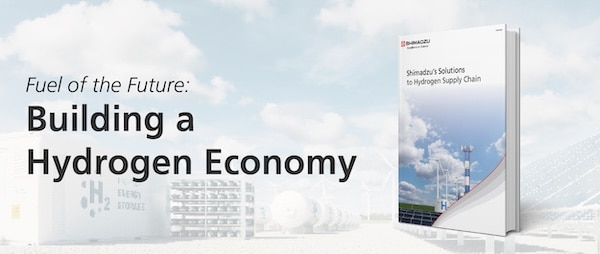
Building a viable hydrogen infrastructure requires total reliability across the entire lifecycle. Shimadzu provides practical analytical solutions for establishing a feasible hydrogen supply chain, from initial hydrogen production through to transportation, infrastructure storage, and end-use utilization.
This comprehensive compendium highlights a variety of technical application notes showcasing how Shimadzu’s advanced testing instruments help safely harness the full potential of hydrogen as the fuel of the future.
Ready to optimize your hydrogen analysis? Download the Shimadzu Hydrogen Economy Application Compendium to explore our complete testing workflows.
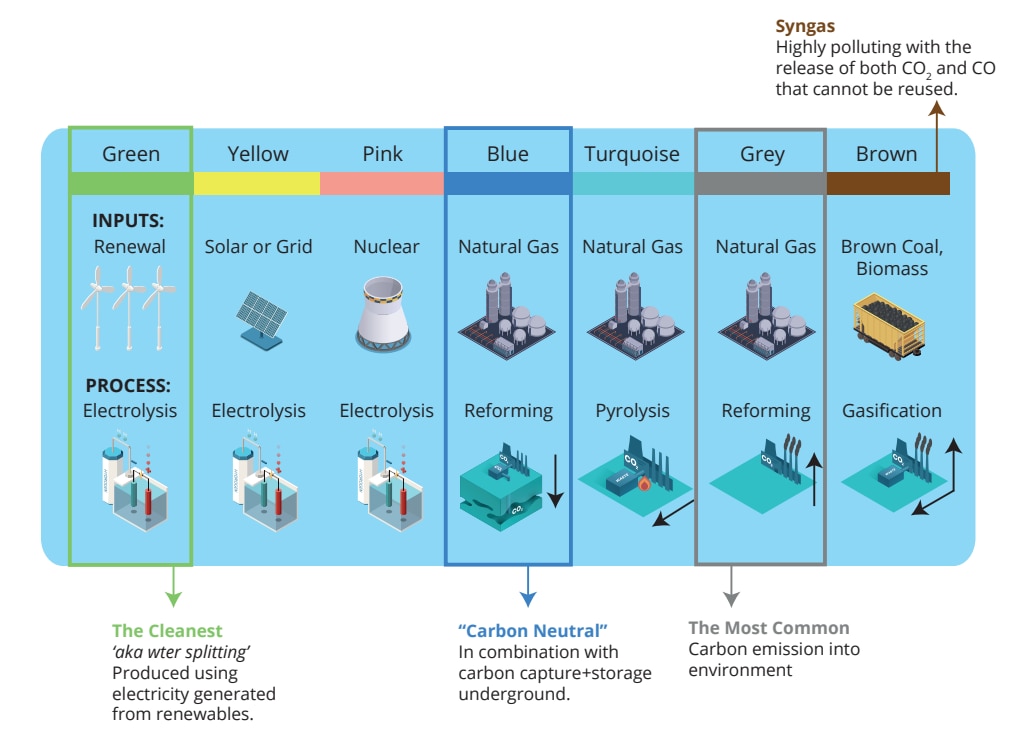
While the ultimate goal is a completely zero-emission energy grid, the transition relies on a mix of production methods that carry different environmental footprints. Currently, hydrogen production is categorized by the source materials and technologies used:

Equip your laboratory with the next-generation solutions required to advance renewable energy research. Shimadzu’s specialized analytical testing suites ensure your hydrogen production, storage, and transport systems meet international quality, safety, and purity standards.
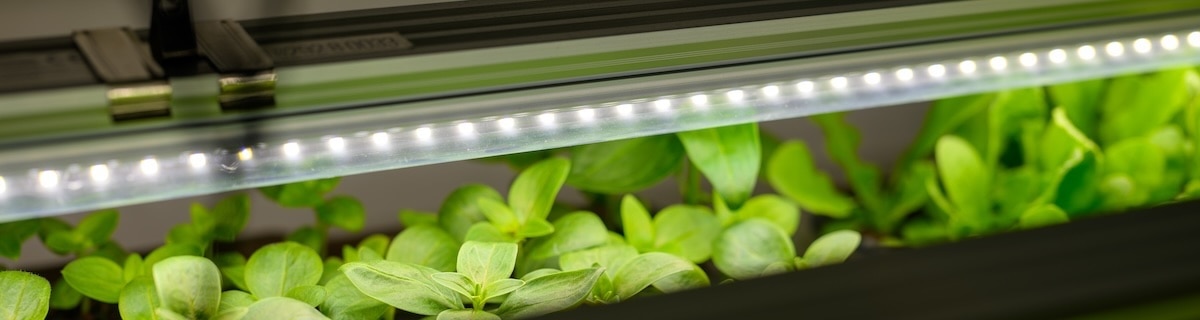
Artificial photosynthesis is an advanced biochemical technique designed to harvest solar energy and store it chemically. During this process, abundant compounds such as carbon dioxide (CO2) and water (H2O ) are captured and converted directly into high-value renewable energy sources. To drive these chemical reactions efficiently, the process relies on specialized photocatalysts to facilitate crucial oxidation-reduction (redox) half-reactions. Artificial photosynthesis typically takes place in two primary forms:
In both pathways, the resulting reaction products—such as hydrogen and methanol—can be fed directly into fuel cell systems to generate clean electricity. With rising atmospheric CO2 concentrations and intensifying global climate challenges, artificial photosynthesis is critical to establishing a closed carbon cycle. In this sustainable loop, excess emissions from human activities are ideally captured and repurposed as high-efficiency solar fuels.
Replicating natural photochemical systems is inherently complex. Current scientific research focuses on four main strategies to optimize solar-to-chemical conversion efficiency:
Inorganic and organic semiconductors serve as light-harvesting materials in photovoltaic configurations to convert solar energy into clean fuels. Current research heavily explores the use of semiconductor nanostructures to maximize surface area and improve overall reaction efficiency.
Supramolecular chemistry utilizes non-covalent interactions to build complex macromolecular structures. These advanced systems typically deploy specialized metal complexes, such as ruthenium (Ru) and rhenium (Re), to act as highly targeted photocatalysts.
Hybrid configurations combine semiconductor materials with supramolecular systems. This integration capitalizes on the unique advantages of both technologies, creating a synergistic effect that significantly enhances the efficiency of photocatalytic reactions.
This approach utilizes light-sensitive microorganisms, including microalgae and cyanobacteria. Cultured as biological converters, these organisms naturally process ambient CO2 and solar energy to synthesize sustainable biofuels.

Accurately measuring reaction products is essential to calculate solar-to-chemical conversion efficiency and evaluate photocatalytic activity. Shimadzu’s robust analytical portfolio provides the precision required to optimize these setups:
Get Shimadzu’s eBook on Analytical And Testing Instruments For Artificial Photosynthesis
Download your copy to unlock workflow solutions for catalyst characterization, analysis of reaction products and more.