Comprehensive Solutions For Pharmaceutical Impurities Analysis

Add Bookmark

Nitrosamines Analysis In Pharmaceuticals

Analysis of nitrosamine impurities at trace levels possess many challenges in terms of solubility of nitrosamines and drug substance/drug products, thermal stability of nitrosamine etc. and may require more than one analytical technique. Shimadzu's highly sensitive UFMS technologies LC-MS/MS and GC-MS/MS powered by Analytical Intelligence offer a wholesome solution for quantification of trace levels of nitrosamine impurities from various drug substances, drug products, solvents etc.

Testing Methods For Detecting The Presence Of Nitrosamine Impurities

Analytical Methods For Quantification Of Nitrosamine Impurities At Trace Levels

Nitrosamine Impurities Detection Testing | Shimadzu

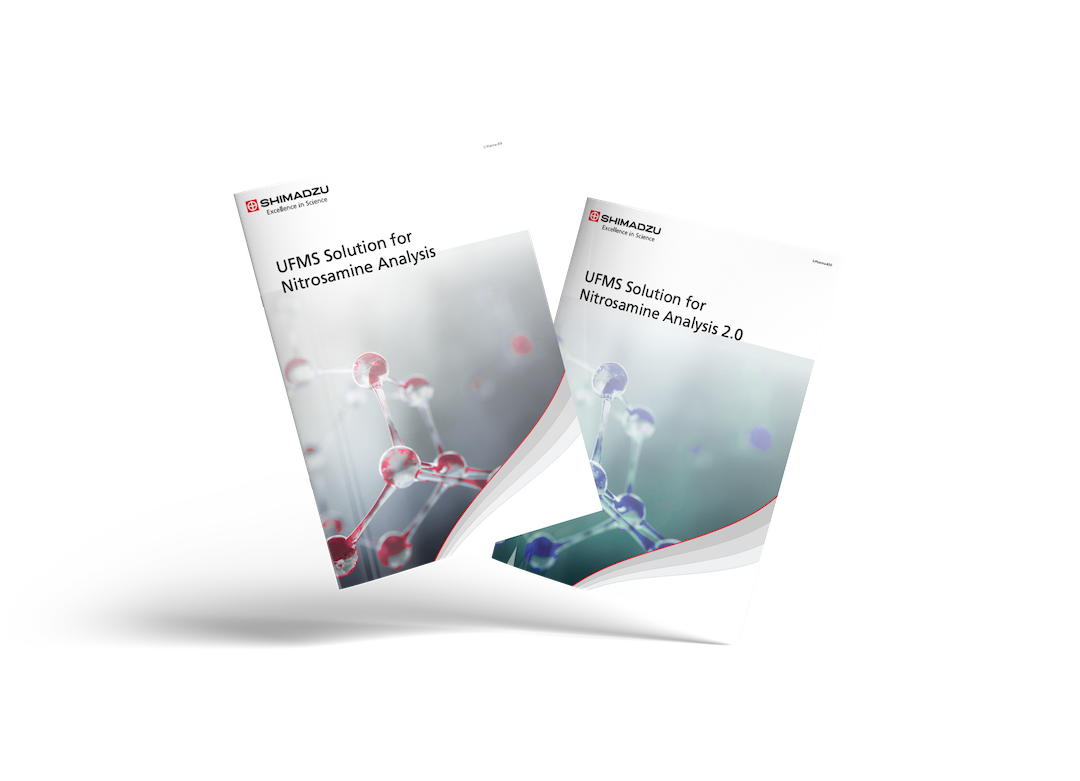
Holistic solutions to measurement of nitrosamines need both GC-MS/MS and LC-MS/MS technologies. At Shimadzu, we have developed future proof methods for anticipated challenges such as ever-changing sensitivity levels, inclusion of other nitrosamines, and sample preparation. Read on to find out the various aspects of our solutions, or download the Bundle Resource for Nitrosamine Analysis.


  • Nitrosamine Analysis In Sartan Medicines

    Proposed United States Pharmacopeia (USP) General chapter 1469 aligns with current scientific and regulatory approaches to ensure the appropriate control of nitrosamine impurities in drug substances and drug products. The objective of this standard is to provide a science-based approach for the control of nitrosamine impurities, eliminating or reducing their presence in drug products.

  • Nitrosamine Analysis In Metformin

    Shimadzu's comprehensive solutions details the analysis of nitrosamine in metformin drug substance, drug products and placebo. Examples include the analysis of NDMA, NMBA, NDEA, NEIPA, NDIPA, NDPA, NDBA and NMPA in metformin ER tablets and placebo using in-house developed methods with liquid-liquid extraction being employed for sample preparation.

  • Nitrosamine Analysis In Other APIs

    Levels of NDMA in ranitidine may increase to unacceptable levels over time and when exposed to higher than room temperatures. Based on these findings, ranitidine is withdrawn from US markets. In this eBook, Shimadzu offer solutions to analyze trace levels of NDMA in ranitidine drug substances using LCMS and methodology described by US FDA. 

  • Nitrosamine Analysis In Residual Solvents

    Recovered materials such as solvents, reagents, and catalysts pose a risk of nitrosamine impurities due to the presence of residual amines (such as trimethylamine or diisopropylethylamine). Quenching step (i.e., nitrous acid used to decompose residual azide) can be a potential source for introduction of nitrosamines during solvent recovery process. 

Download Now! Bundle Resource For Nitrosamine Analysis

Leveraging Shimadzu's Analytical Intelligence™ For Nitrosamine Impurities Analysis

Analytical Intelligence | Shimadzu

With changes and upgradation of nitrosamine regulations, keeping up with method development, validation and regular analysis is a daunting task. Add to this new challenge of work from home and social distancing, it’s an uphill battle where laboratories must possess the capability of delivering reliable and robust results in time and continuously. Power your labs with chromatographic and mass-spectrometry technologies packed with Analytical Intelligence™ from Shimadzu.

Discover the robust functionalities of Shimadzu's Analytical Intelligence™ for enhanced confidence, convenience and efficiency in your laboratory work today.

Learn More 

EG DEG Contamination

Pharmaceutical excipients like propylene glycol, glycerol, and sorbitol solution are often added to medicinal syrups to improve their taste, texture, and solubility. These raw materials, however, can be susceptible to contamination from toxic substances such as EG and DEG. Ingesting a contaminated syrup can cause severe symptoms, including abdominal pain, vomiting, an altered mental state, and kidney injury, which may ultimately lead to death.

Gas Chromatography (GC) is a widely used analytical technique for testing pharmaceutical products for DEG and EG. While the minimum safe ingestion levels for humans are not definitively known, a detection level of 0.10% for each substance is generally considered adequate for screening raw materials and finished products. This is based on the USP method, though some laboratories may choose to follow stricter limits, such as the 0.006% guideline from Indonesia's BPOM.

Turnkey Solutions For EG & DEG Analysis

sample

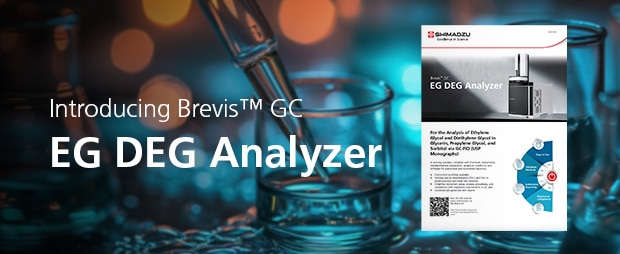
To address this critical issue, Gas Chromatography (GC) is the most widely used analytical technique. Shimadzu provides a comprehensive, turnkey solution for EG and DEG analysis, in accordance with USP or IP monographs. Our EG DEG Analyzer streamlines the entire workflow, from instrument setup and sample preparation to automated reporting.

Discover Shimadzu's Leading Technologies For Impurities Analysis

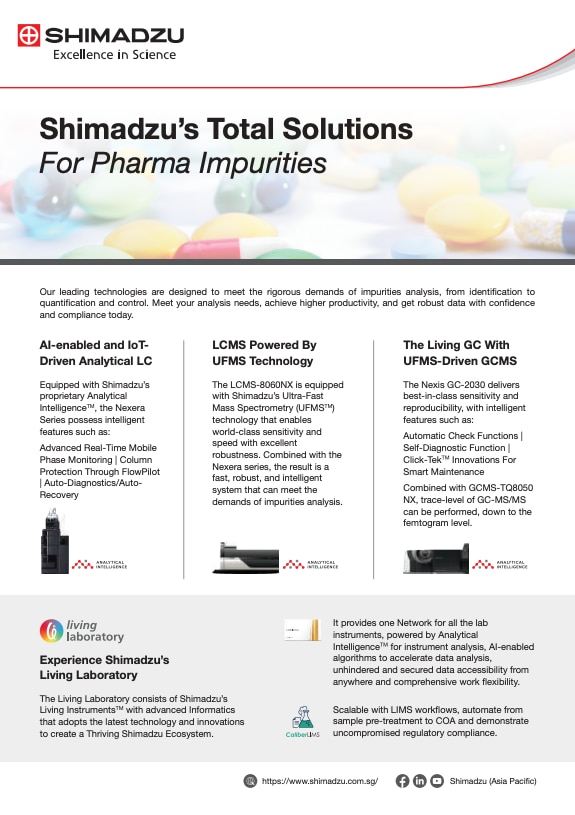
Shimadzu's Total Solutions For Pharma Impurities

Achieving accurate, reliable impurities analysis is critical to pharmaceutical safety and compliance—and it’s never been more challenging as compounds and workflows grow increasingly complex. Shimadzu rises to this demand with industry-leading chromatographic and mass spectrometry technologies. Driven by our proprietary Analytical Intelligence™ and Ultra-Fast Mass Spectrometry (UFMS™) technology, our solutions deliver the world-class sensitivity, speed, and robustness needed to identify, quantify, and control impurities confidently.

To maximize these benefits, take your lab integration to the next level with our Living Laboratory. The Living Laboratory unites Shimadzu’s complete ecosystem—from hardware to software—to automate tasks, simplify processes, and boost productivity. With advanced AI-driven algorithms enhancing instrument runs, data analysis, and reporting within a secure, networked environment, it enables smart, regulatory-compliant workflows that drive efficiency, reliability, and impactful results.

Discover Shimadzu’s total solutions for pharma impurities today.