


SPOTLIGHT
Application News
EG DEG Testing In Raw Materials
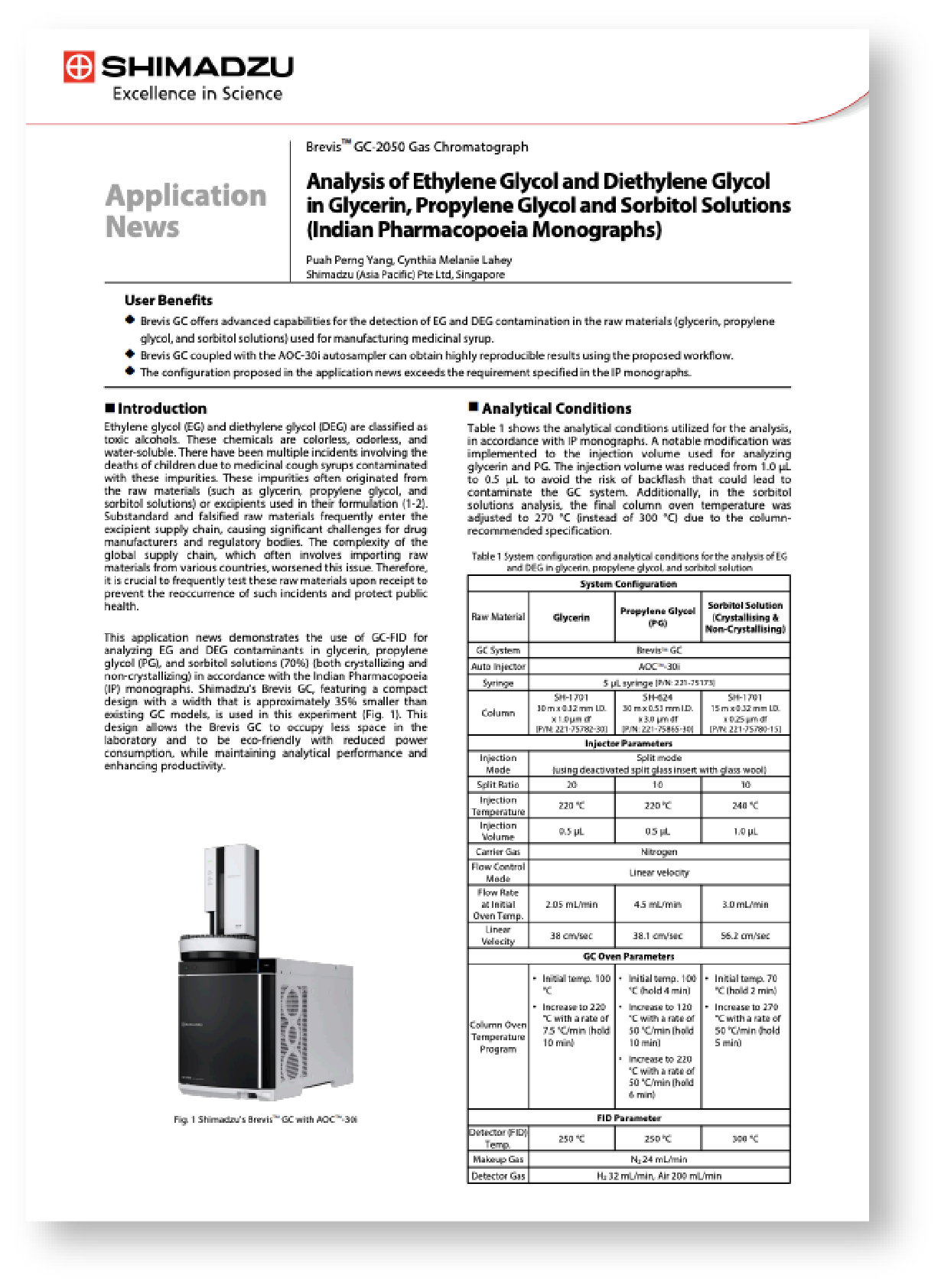
Analysis of Ethylene Glycol and Diethylene Glycol in Glycerin, Propylene Glycol and Sorbitol Solutions (Indian Pharmacopoeia Monographs)
This application highlights the use of GC-FID for analyzing EG and DEG contaminants in glycerin, propyleneglycol (PG), and sorbitol solutions (70%) in compliance with Indian Pharmacopoeia (IP) monographs. TheBrevis GC, paired with the AOC-30i autosampler, delivers highly reproducible results using the proposedworkflow. Notably, the configuration outlined in this application exceeds the stringent requirements specifiedin the IP monographs, ensuring superior analytical performance and reliability for contaminant analysis.
EG DEG Testing In Raw Materials
Analysis of Ethylene Glycol and Diethylene Glycol in Glycerin, Propylene Glycol and Sorbitol Solutions (Indian Pharmacopoeia Monographs)
This application highlights the use of GC-FID for analyzing EG and DEG contaminants in glycerin, propyleneglycol (PG), and sorbitol solutions (70%) in compliance with Indian Pharmacopoeia (IP) monographs. TheBrevis GC, paired with the AOC-30i autosampler, delivers highly reproducible results using the proposedworkflow. Notably, the configuration outlined in this application exceeds the stringent requirements specifiedin the IP monographs, ensuring superior analytical performance and reliability for contaminant analysis.