


Advancing Biopharma With High-Performance Bioanalysis Solutions
Optimizing Analytical Strategies for Biopharmaceuticals
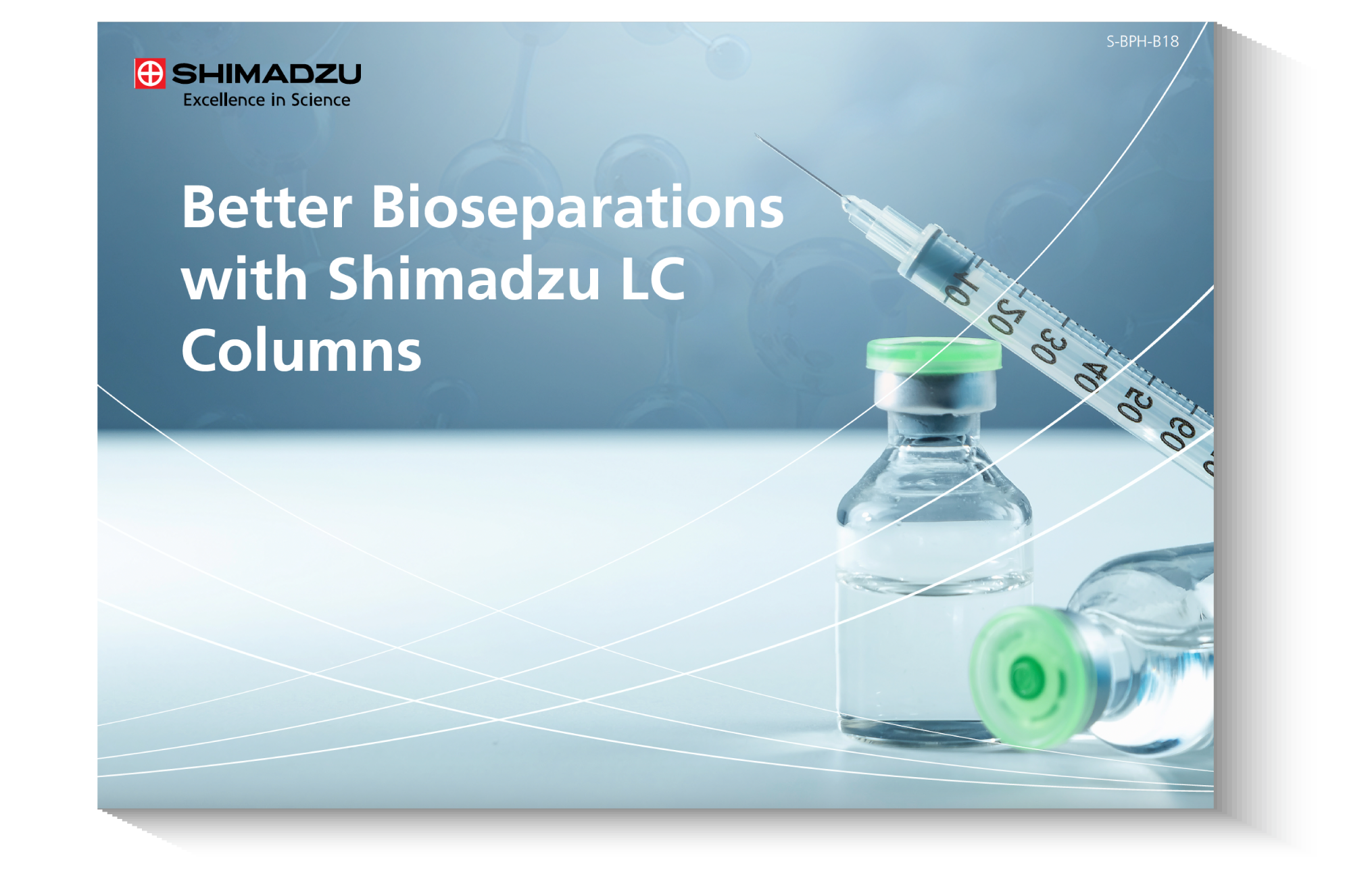
Ensuring the safety, efficacy, and cost-efficiency of biopharmaceuticals requires cutting-edge analytical approaches. This eBook delves into advanced liquid chromatography (LC) techniques, offering actionable insights to enhance your analysis of complex biologics.
Ready to optimize your bioseparation workflows? Download our free eBook to gain access to expert methods and practical applications.
Key Topics Covered:
Size Exclusion Chromatography (SEC) For Aggregate And Fragment Analysis
SEC separates molecules by size and molecular weight. It has been the main technique for the characterization of protein-based therapeutic products (e.g. monoclonal antibodies, mAbs) due to its speed and reproducibility. As protein aggregation renders the drug to be unsafe and ineffective, the analysis of these undesirable protein aggregates and fragments could indicate the applicability and efficacy of the produced therapeutic drugs. Typically, SEC coupled to UV detection is used to analyze aggregation and conformational variants in order to monitor the integrity of the investigated drug sample.
Charge Variant Analysis Using Ion Exchange Chromatography (IEX) Analysis
Proteins consist of many weak acidic and basic groups which can undergo changes in charge heterogeneity during biopharmaceutical production and purification processes. These not only affect the stability, but also the activity of the pharmaceuticals and may cause adverse immunological reactions. The identification of charge variants in development, and their monitoring throughout manufacturing, is critical to the production of safe and effective drugs. Ion Exchange Chromatography (IEX) utilizes the unique relationship between the net surface charge of the protein and pH for optimal protein separation. The pH or salt concentration defines the number of charges on the protein and helps to stabilize the native structure of the protein in the buffer used during analysis
Intact Mass Analysis By Hydrophobic Interaction Chromatography (HIC)
HIC separates analytes based on its hydrophobic interactions with the column stationary phase. The separation occurs in less denaturing conditions and allows the proteins to maintain their biological activity, which is useful for protein separation and purification. For biopharma applications, HIC is suitable for the separation of antibody-drug conjugates (ADCs) with different drug-antibody ratios (DAR). Shim-pack Bio HIC columns can analyze DAR of ADC with relatively low pressure and high resolution.
Shim-Pack Scepter (Reversed Phase Column) For Intact mAbs Characterization
Monoclonal antibodies (mAbs) currently represent the largest class of therapeutic drugs made by the biopharma industry and will play a significant role in the future of pharmacological disease interventions. Purification, characterization and monitoring of mAbs are critically important to drug development, with a variety of analysis techniques routinely used.
Due to the heterogeneity in the hydrophobic structure of mAbs, reversed-phase LC separation is becoming a key choice for monitoring purity and stability during manufacturing, formulation and storage. Shimadzu offers reliable solutions for identifying and quantifying degradation products, and monitoring them throughout production and formulation, using LC systems, and MS for quantitation, and/or high-resolution accurate mass analysis.
Tackle Peptide Mapping With Reversed Phase Chromatography
Comprehensive protein characterization is crucial for the biotherapeutics quality control, process monitoring, and more. It involves the detection and monitoring of single amino acid changes, modifications, and degradation products. Peptide mapping is an essential technique for studying the primary structure of proteins and it typically involves enzymatic digestion of protein, followed by chromatographic separation. This technique has become much more convenient and used as a method of choice in many biopharma analysis and workflows.
Shimadzu offers a comprehensive portfolio of solutions for the highly accurate confirmation of protein sequence, identification of modifications, and routine protein fingerprint monitoring for QA/QC, using LC systems and columns, LC-MS systems and MALDI-MS platforms.
Advancing Research With Bioanalysis Workbook
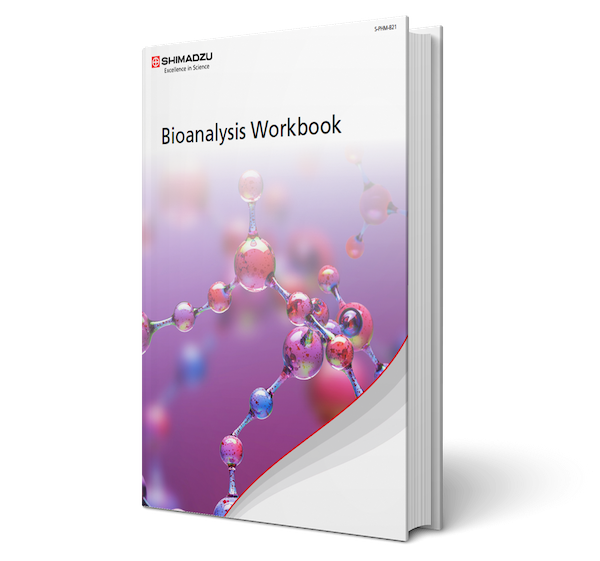
Our Bioanalysis Workbook is a detailed guide designed for scientists and researchers in the pharmaceutical and clinical research sectors. It covers the entire spectrum of bioanalytical applications, demonstrating how innovative technology can streamline workflows, enhance sensitivity, and deliver robust, reliable results.
Download our Bioanalysis Workbook today to access detailed methodologies, validation data, and expert insights that can help you overcome your toughest bioanalytical challenges.
Featured Applications Include:
Drugs for Respiratory Diseases
Discover rapid and sensitive quantification approaches for compounds like Salmeterol, Fluticasone Propionate, Mometasone, and Budesonide. These LC-MS/MS methods support robust pharmacokinetic and bioequivalence studies by accurately measuring drug concentrations in human plasma.
Drugs for Cardiovascular and Associated Diseases
Leverage high-sensitivity LC-MS/MS techniques for Telmisartan, Valsartan, Felodipine, Hydrochlorothiazide, and Tiotropium. These applications ensure precise measurement at low concentrations, delivering dependable analytical performance for complex research.
Drugs for Infections
Find fast analytical solutions for various antibiotics, including β-Lactam antibiotics and different Polymyxin B variants. The workbook also details approaches for analyzing antifungal agents and comprehensive panels for anti-HIV medications, optimized for therapeutic drug monitoring in human plasma and serum
Peptide Drugs for Hormonal or Metabolic Disorders
Explore specialized quantitative methods for intact insulin, its analogues, glucagon, and other peptide hormones. The use of multidimensional and selective LC-MS/MS workflows delivers high precision and reliable results for these large, complex molecules.
Endogenous and Synthetic Hormonal Steroids
Learn about advanced analytical strategies for quantifying hormonal steroids, including active Vitamin D metabolites. These high-sensitivity LC-MS/MS methods can accurately measure low physiological concentrations in serum, which is essential for clinical research and diagnostics.
Antibody Drugs
Gain insight into specialized mass spectrometry methods for the bioanalysis of antibody-based therapeutics. This section covers innovative sample preparation techniques, such as nSMOL Antibody BA Kit for the selective analysis of monoclonal antibodies like Herceptin, Cetuximab, and Denosumab, facilitating accurate pharmacokinetic assessments.